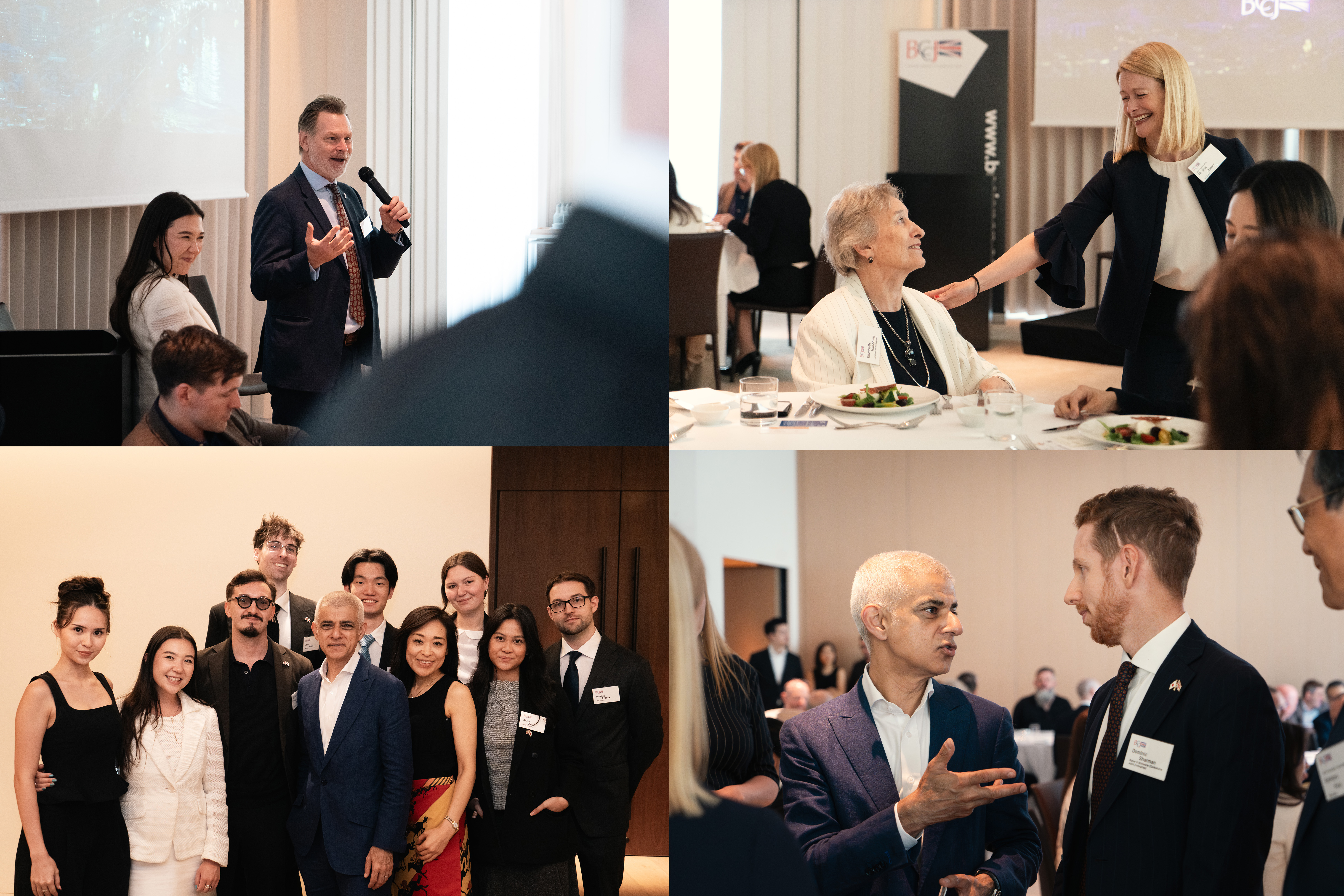
Sir Sadiq Khan, Mayor of London - A BCCJ Exclusive Fireside Chat

A Fireside Chat with Sir Sadiq Khan, Mayor of London
The deep and growing ties between London and Tokyo, built on the foundation of trust and shared values, were the focus of remarks by Sir Sadiq Khan to members of the British Chamber of Commerce in Japan (BCCJ) during a fireside chat in mid-June.
The Mayor of London was visiting Tokyo with a delegation of 14 British firms from the creative tech sector as part of a trade mission to Singapore and Japan to drive trade, investment and cultural links between the UK capital and the major Asian economies.
While in Japan, Khan will meet political and industry leaders as well as representatives of major businesses from finance, tech, real estate, sport, creative and entertainment, with the goal of strengthening bilateral relations and promoting London as a global investment and innovation hub.
'London and Tokyo are global capitals, financial engines and creative powerhouses. That’s why we’ve enjoyed such a strong partnership for so long. And today, that partnership is delivering real results,' he told BCCJ members from across business, government and civil society.
In 2025, total trade in goods and services between the UK and Japan was £33 billion, with around 16,600 British businesses importing or exporting goods from Japan. In addition, there are approximately 1,000 Japanese companies in the UK, supporting more than 200,000 jobs.
'From AI and technology to gaming and the creative industries, London and Tokyo are working together in some of the fastest growing sectors in the global economy,' he said. adding the partnership 'creates jobs, drives innovation and delivers opportunities on both sides.'

Building on trust
Khan arrived in Tokyo after delivering the prestigious Lee Kuan Yew World City Prize lecture at the World Cities Summit in Singapore in honour of London winning the 2026 World City Prize. Presented in March, the award recognises the city’s achievements in urban development, innovation and strategic leadership.
While in the Lion City, he also launched a major new international tourism and investment campaign promoting London, met with developers to explore real estate partnerships and sought to strengthen bilateral trade. According to the government, Singapore is the UK’s 19th largest trading partner, accounting for 1.4% of total UK trade in 2025.
Khan said bolstering diplomatic and economic ties with trusted, reliable allies such as Japan and Singapore have never been more important amid current geopolitical uncertainty, including the continuing impact of Brexit, the fallout from US tariffs and the Iran war.
'At a time of geopolitical upheaval and global energy shocks, we need to be looking outwards and working with allies abroad who have a shared interest in upholding international law and free and fair trade,' he added, noting that Japan is among the partners who 'understand that prosperity and security go hand in hand.'
The UK–Japan relationship is going from strength to strength, he continued, citing Prime Minister Sir Keir Starmer’s signing of an £18 billion deal on June 14 with his counterpart Sanae Takaichi. The pair agreed a package of investments across the technology, clean energy, infrastructure development and life sciences industries that is expected to create tens of thousands of jobs across the UK.
Deals were also inked, including the UK–Japan Frontier Technology Partnership, enhancing world-leading British research capabilities with Japan’s advanced manufacturing, and a joint Economic Security Declaration for advancing cooperation on economic security.
Longer-term, new partnerships can also be expected between businesses in London and Tokyo. Khan said the 14 British firms meeting investors, studios and corporate partners in Tokyo as part of the CreaTech Trade Mission to Japan are eager to learn about the Japanese market and establish bilateral connections.
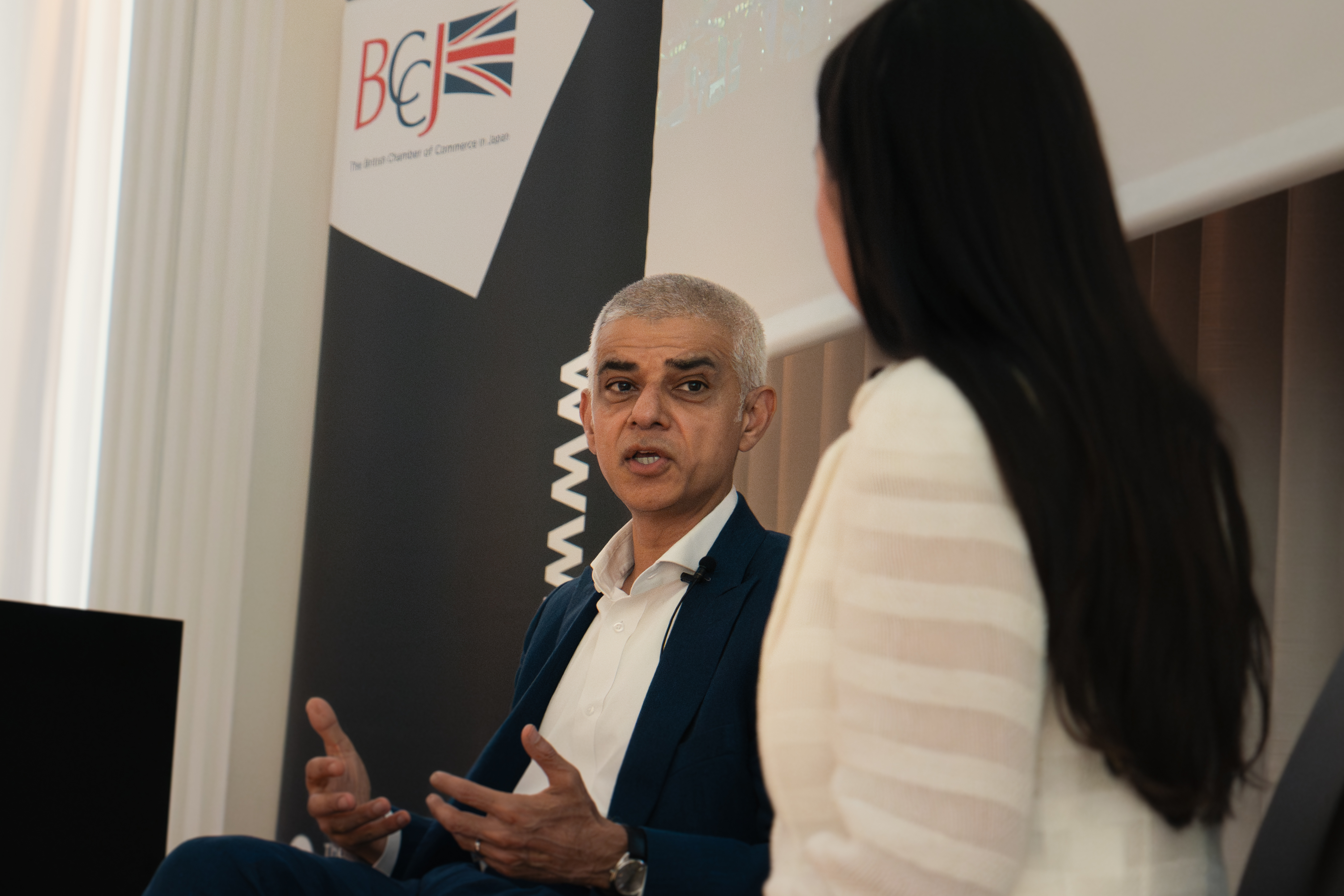
Vision for London
Asked about London’s status as a place for doing business, Khan pointed to the city’s advantages: the time zone, the English language, it’s one-stop-shop role as the political, tech, financial and cultural capital of the UK, its agglomeration of sectors and its pipeline of top talent thanks to the high concentration of universities.
'Each year, more than 1,000 students from Japan go to London to study. And there are 18,000 Londoners of Japanese origin,' he said.
Another strength is the city’s diversity, he explained: 'Our diversity makes us stronger, not weaker. It makes us richer, not poorer—and that diversity is our USP, our secret weapon.'
Looking at potential growth sectors, Khan predicted culture and the intersection of culture and technology will become increasingly important for both London and Tokyo. Creative industries are one of eight priority growth sectors identified by the UK government in its Modern Industrial Strategy and by the Japanese government as a primary target in its Creative Industries Sector Plan.
In another bilateral connection, Tokyo will host the 15th summit of the London-headquartered World Cities Culture Forum in October 2026. Held over three days, the event will bring together civic leaders from across a global network to address urban challenges, promote sustainable development and build intercity networks through culture.
AI also has potential for business development in both cities, although Khan admitted public discourse around the topic seems to fall into three core camps: evangelists, alarmists and realists. His office has established a taskforce to examine how AI is reshaping work in the capital, to identify risks and to recommend strategies that protect jobs and promote skills training. Khan said he aims to explore what London and Tokyo can learn from each other in this area.
In closing, Khan outlined some of his longer-term plans for London, such as pedestrianising Oxford Street to improve consumers’ shopping experience and cleaning up the city’s 41 rivers and tributaries. While admitting the challenge of tackling water pollution, he noted the Ultra Low Emission Zone he implemented in 2019 has cut nitrogen emissions by an estimated 54% in central London, enabling the city to meet legal limits for air quality in 2024, almost 200 years earlier than was projected when he took office in 2016.
With urbanisation a growing phenomenon, it is also essential to plan for growth, including through the provision of affordable housing, public transport and jobs in the private sector where people can flourish, he said.
'What I can do is create an environment where people do well,' he added. 'If you’re a leader—whether you’re running a business or are the mayor of a city—you can’t stand still.'