The Power of Women in STEM
Community and Business
Diversity & Inclusion
06 November 2025
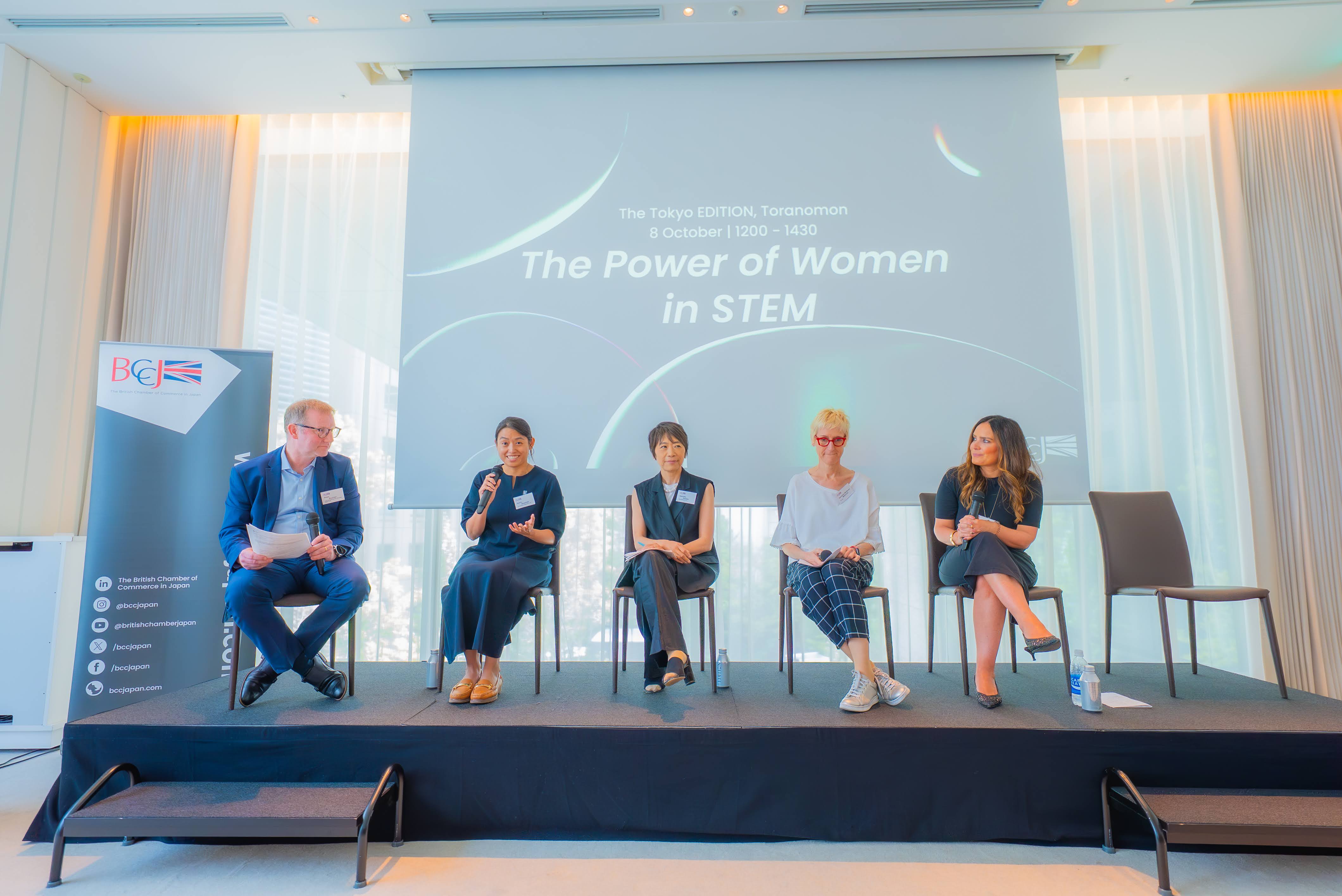
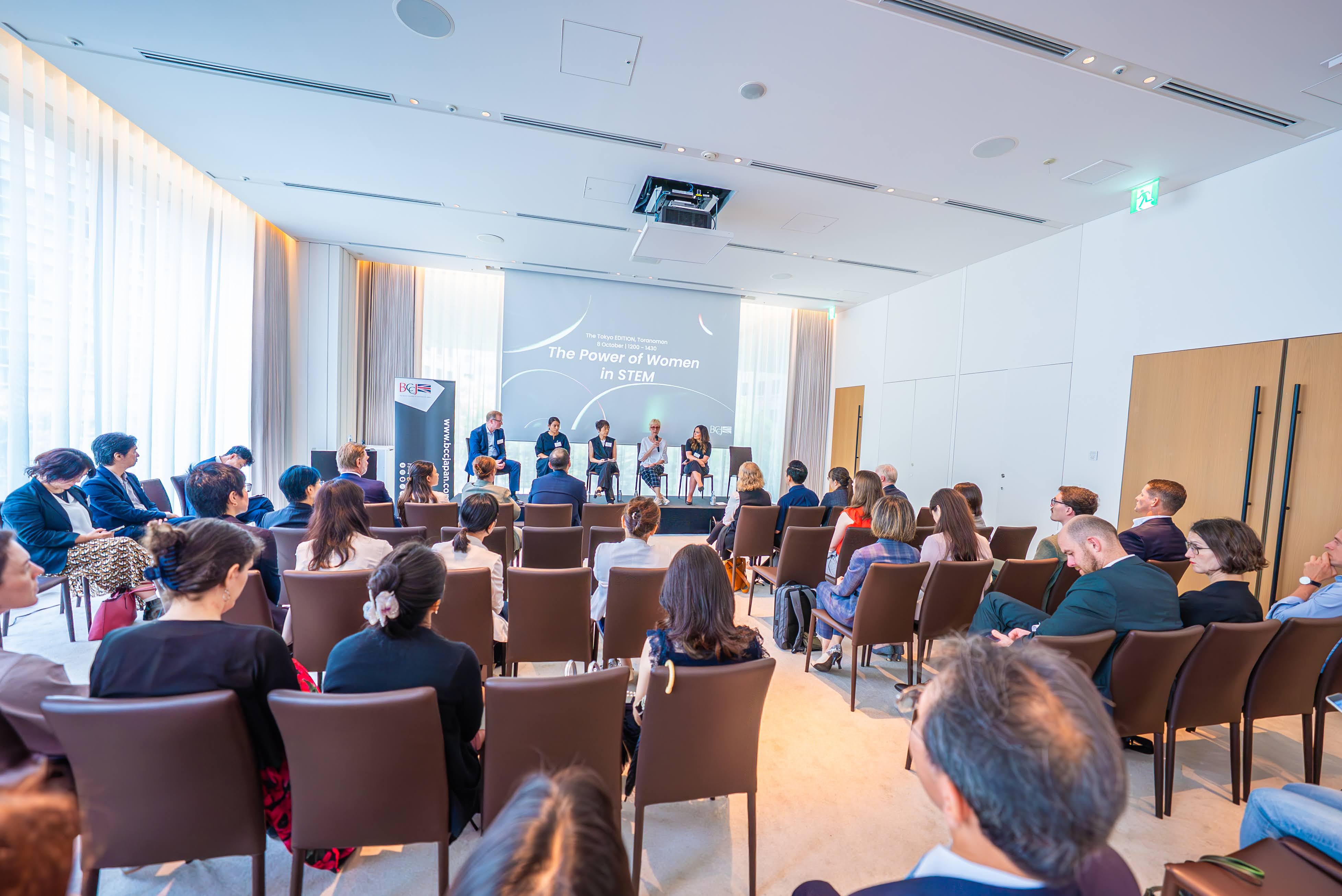
Celebrating and exploring the experiences of women in science, technology, engineering and mathematics (STEM), while inspiring the next generation of women to thrive in these sectors, was the theme of two recent consecutive panel discussions organised by the British Chamber of Commerce in Japan and sponsored by International Nuclear Services Japan.
The event was opened by East Midlands Mayor Claire Ward, who was visiting Japan as part of a trade mission to promote investment and trade opportunities. With women accounting for only 29% of people working in STEM in the UK, she pointed to the need to remove barriers that women face to entering and progressing in such roles.
'I want every girl and young woman, wherever they are from, including those in hard-to-reach communities, to see STEM as a route to a bright future,' she said.
'In the East Midlands, we’re playing a vital global role in STEM, as we are home to advanced manufacturing, clean energy research, digital innovation, life sciences and much more,' she added, noting international collaborations, including between Nottingham and Tokyo universities on cutting-edge medical research.
'Investing in women in STEM is an investment in resilience, creativity and progress,' she said, noting the East Midlands’ efforts in outreach, financial support, mentoring and partnerships with industry to increase gender diversity in STEM.
Deep dive into nuclear
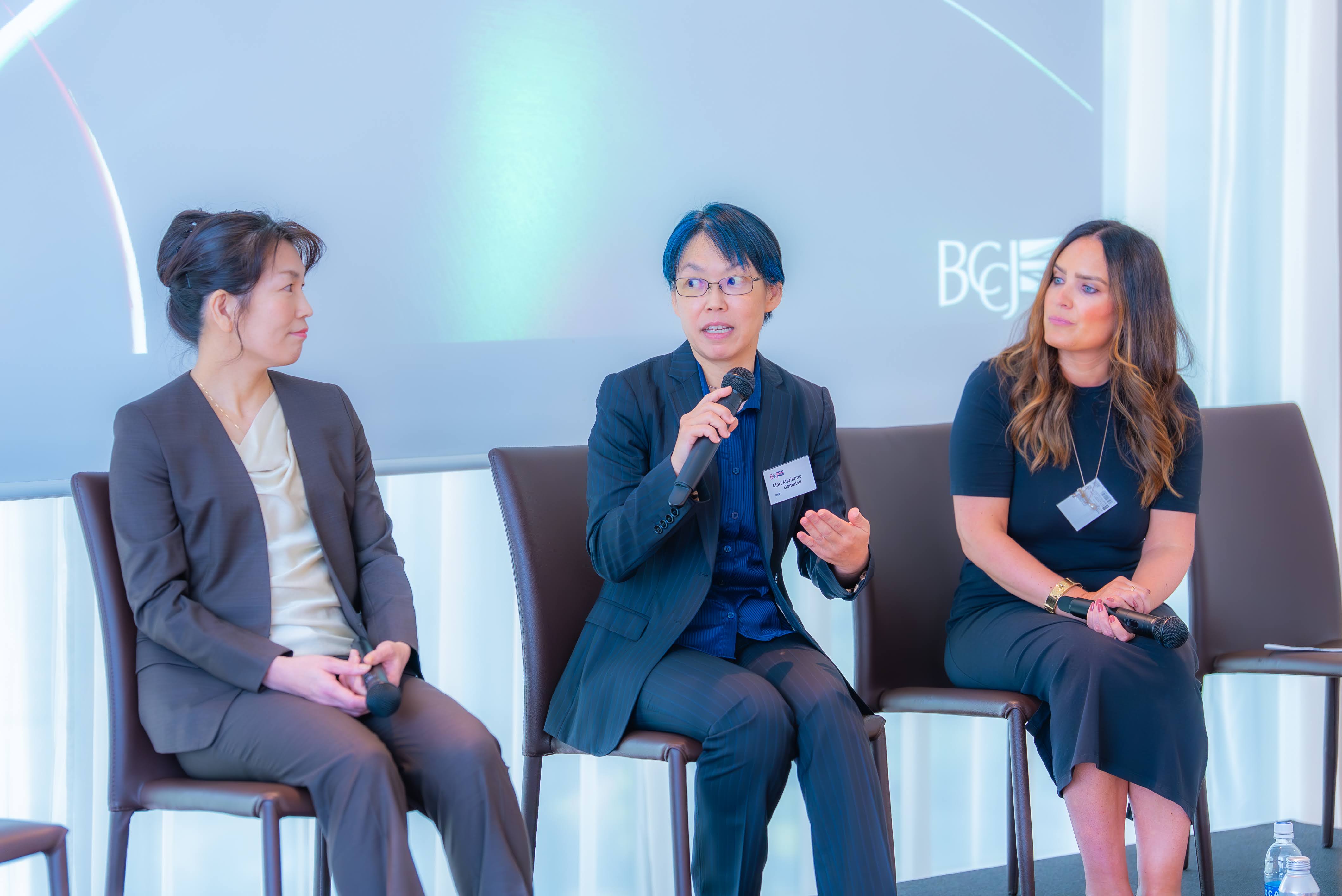
Moderator Peter Buchan, president of International Nuclear Services Japan, began the first interactive sessionby introducing the panellists: Ciara Middlehurst, co-CEO of Nuclear Transport Solutions; Dr Mari Marianne Uematsu, general manager of the technological strategy group at Nuclear Damage and Compensation and Decommissioning Facilitation Corporation; and Dr Yumiko Kumano, deputy chief at Fukushima Daiichi D&D Engineering Company, Tokyo Electric Power Company Holdings (TEPCO).
Asked about their respective career journeys, Middlehurst said she started out in business before spending a decade in defence and then entering the nuclear industry. Due to her limited background in STEM, she has surrounded herself with a highly skilled executive and is supported by mentors and networks.
Uematsu said her return to Japan after working in France posed challenges for her superiors and peers, who evaluated her as both a woman and someone without the full sensibilities of a Japanese person. Her response was to focus on showing her ability and usefulness.
Driven by curiosity, Kumano studied mechanical engineering at university before joining TEPCO, where she said she faced difficulties not because of her gender but due to the nuclear accident following the Great East Japan Earthquake and Tsunami.
Asked about the use of gender quotas, Kumano noted that while working at the International Atomic Energy Agency in Vienna 10 years ago, 30% of professional and senior staff were women, with efforts ongoing to increase the ratio. Some men viewed the policy as potentially discriminatory, she said.
Uematsu said more women can succeed in STEM by eliminating gender biases during hiring: 'AI is not a perfect tool—we need to give it non-biased Big Data—but using it for the first screening of applicants could be one tool toward the solution.'
Pathways to STEM
The second panel comprised Sachiko Kameo, division vice president of the development operations division, R&D of AstraZeneca KK; Dr Vanessa Mattiussi, lead data scientist at EY UK; and Kaoru Okamoto, head of partnership project engineering at Rolls-Royce Japan Co.,Ltd. The speakers began by outlining how their respective organisations are supporting greater gender diversity in STEM.
At AstraZeneca, around 40% of senior executives in the R&D space are women, but the firm remains committed to do more related to diversity, equity and inclusion, including through implementation of performance-focused evaluations and assignment of mentors, shared Kameo.
The EY Global Women in Technology programme supports girls and women to enter, thrive and lead in the world of technology, with 40 networks across 150 countries. In 2024, EY began collaborating with Women in Cloud to equip women with opportunities for upskilling, career advancement and leadership roles in artificial intelligence and cybersecurity. Furthermore, the EY STEM app provides activities to inspire interest in STEM among girls aged 13–18, said Mattiussi.
At Rolls-Royce, 'women in STEM is a core strategy … important for business and innovation,' said Okamoto, adding that the firm employs a global outreach programme to provide girls and women with access to education, knowledge and exposure related to STEM.
In the UK, Rolls-Royce partners with The Scouts to spark curiosity and confidence in children and young people through STEM. Okamoto explained that the organisation’s mission of developing lifelong skills is important as it inspires creativity. In Japan, Rolls-Royce’s support of an annual science camp provides opportunities for children to have hands-on experience and interact with engineers, to encourage them to enter STEM.
Middlehurst introduced International Nuclear Services’ sector-wide initiative Destination Nuclear, launched in 2024 to attract young people into the nuclear sector over the next two decades. Still, she recognised that industry changes will take time, pointing out that the ratio of nuclear industry roles held by women has remained at 22% for several years, short of the target of 40% set in 2018.
Career advice
The speakers noted the challenges of working in STEM, particularly in Japan where there is less gender diversity in those sectors.
'There can be resistance … there is a terminology in Japan that puts a bias [against women in STEM roles] in people’s minds,' said Okamoto, who explained that having to rely on colleagues to confirm her job title when meeting others hampers self-confidence.
Mattiussi noted that women with technical backgrounds have long been overlooked for senior roles out of concern they would be unsuited to the project- and revenue-focused tasks they would have to carry out. However, in recent years, that perception has 'changed rapidly,' with more women from STEM backgrounds working at director and partner level.
The panellists called on women considering STEM to seize opportunities, take risks and look out for female mentors and male advocates.
'Try and deal with any negative thoughts you have early in your career. Don’t hold yourself back. Find strong female role models and listen to their career journeys,' said Middlehurst.
'Be curious and make an effort to differentiate yourself,' said Mattiussi. 'A mentor who supports and advises you, especially at the beginning of your career, is helpful. If your employer doesn’t have a programme, reach out to someone with whom you can share ideas and concerns.'
Okamoto agreed, noting there is 'a big world' related to women in STEM, including organisations and professional networks.