
The Future of APAC Retail and Japan’s Next Consumer Wave
The Asia Pacific is 'the global pacesetter' for retail growth, with store-based sales projected to grow 20.4% and non-store sales 43.4% by 2028, according to the 'Global Retail: 2025 Trends & 2026 Outlook Report' by professional services and investment management firm Colliers.
Within the region, Japan’s retail market is performing particularly well, driven by record inbound tourism, high-end luxury spending and rising demand for pop culture goods. Still, with the merging of digital and physical retail models and growing inflationary pressures, consumer expectations around design, value and brand experience are shifting, leaving many British retailers wondering how to stay relevant in Japan.
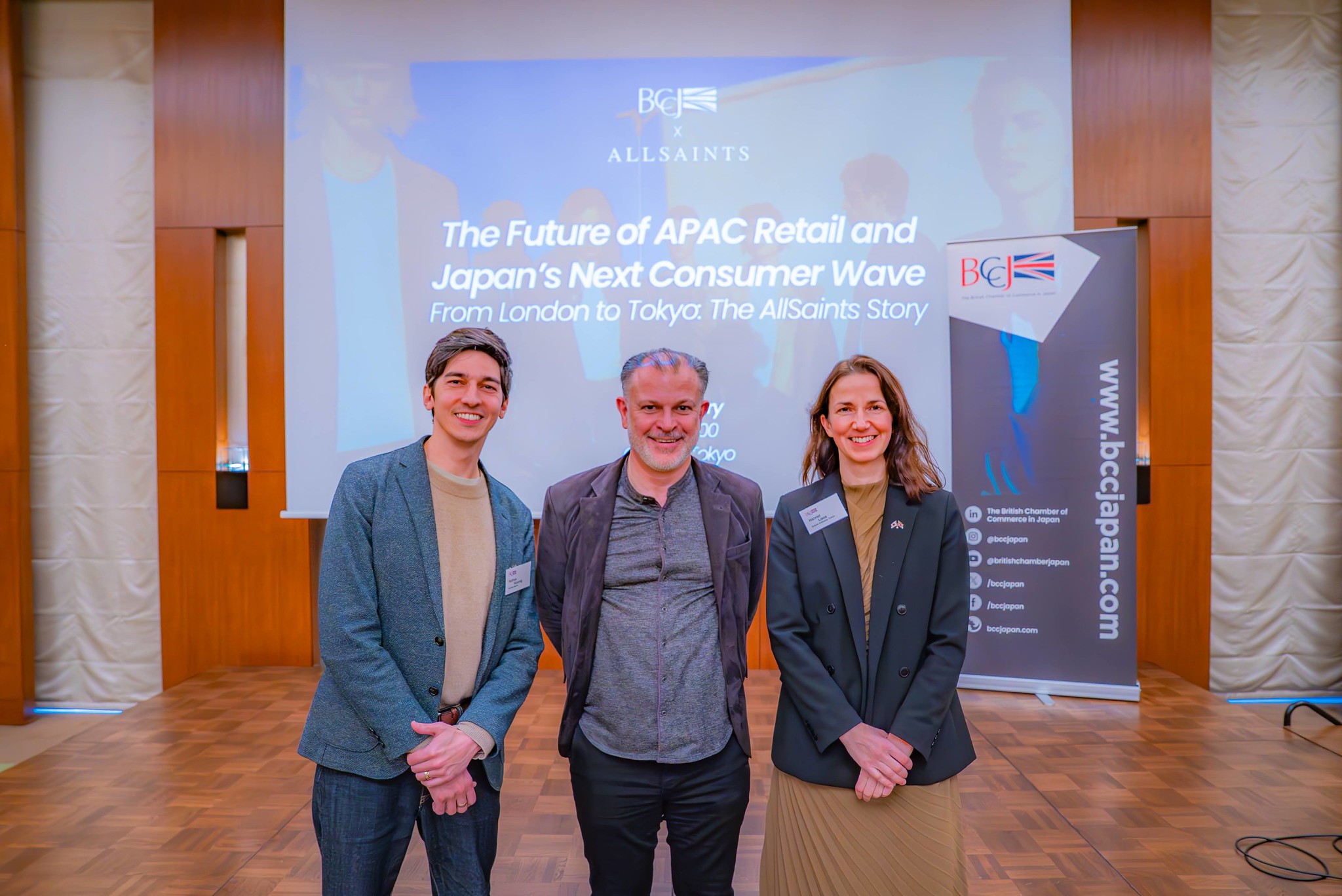
Amidst this background, the British Chamber of Commerce in Japan (BCCJ) held the event, The Future of APAC Retail and Japan’s Next Consumer Wave, which featured presentations from experts in marketing, retail and government.
Localising marketing
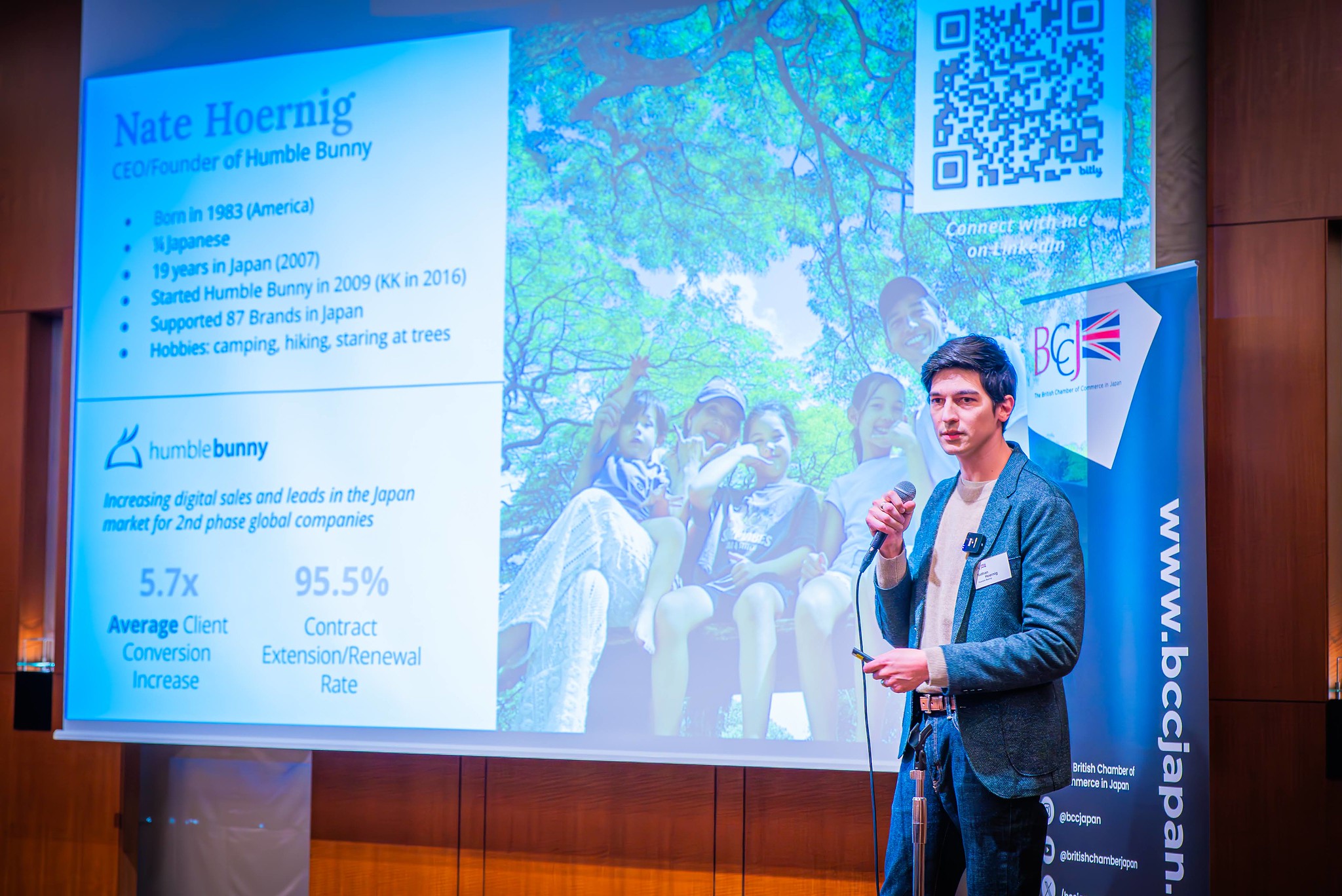
Nate Hoernig, founder and CEO of marketing agency Humble Bunny, began by introducing one example of how Japanese culture influences the retail market: oshikatsu. This practice of boosting the career of one’s idol through activities, such as buying merchandise and attending meet-and-greet events, is practiced by an estimated 14 million people in Japan, making it something that cannot be ignored by marketers, he said.
'Oshi culture isn’t about obsession with idols—it’s about the emotional fulfilment people get from actively supporting someone’s growth,' he said, adding that oshikatsu has three drivers: social validation, self-fulfilment and eudaimonia (defined as 'human flourishing, living well or a life of meaning and purpose, a state achieved through virtuous activity, developing one’s full potential and living in accordance with reason, rather than a fleeting feeling of pleasure').
If brands, therefore, use oshikatsu idols as the face of their products, they are likely to enjoy more efficient marketing and greater retail sales. He noted: 'Oshi culture and the consumer, especially younger generations, are responding to campaigns that give permission for more than just social credibility and identity reinforcement … The old way of ‘here, hold this bag’ lazy influencers for marketing is not working anymore.
'Personal branding and creator economies are booming right now,' he continued. 'When we focus on people, stories and a eudaimonia aspect—if we can find it—we’re seeing better results.'
In addition, Hoernig advised brands to create a marketing plan that finds and celebrates their people, customers and employees; tells a story; and engages with organisations and individuals that can promote the brand—the 'easiest way for eudaimonia to kick in' for consumers, he said.
Building company culture
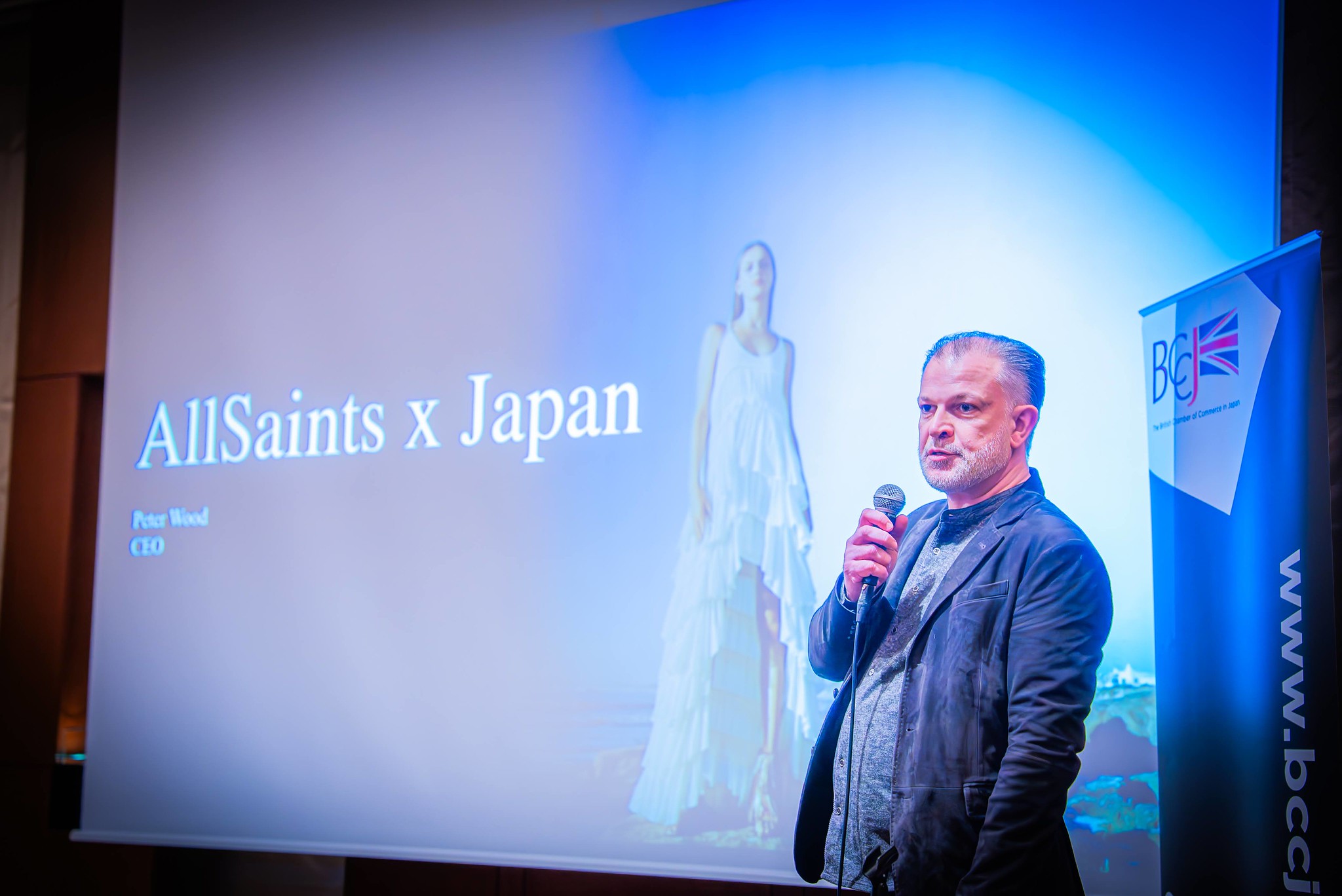
Next to speak was Peter Wood, Global CEO of London-headquartered fashion retailer AllSaints. Founded in 1994, the brand sells menswear, womenswear, footwear and accessories through its online website and brick-and-mortar stores in 16 countries. This year marks AllSaints’ 10th anniversary in Japan, and its Cat Street store in Tokyo’s popular Harajuku district is its top revenue store in Asia.
Wood accepted his current position in 2018 after stints as the firm’s CFO and interim CEO. From the outset he has aimed to 'be himself' in the role, including by drawing on his experiences and learnings, such as the importance of team harmony, seeing the brand as others do and prioritising certainty over ambiguity.
His first task was to create a simple plan, make every team member aware of the part they need to play in it and convey that 'if they go ‘above and beyond,’ they will be recognised and rewarded.' His strategy is equally simple: 'to create amazing product, tell people that’s what we do and make it as easy as possible for customers to buy it.'
One reason for this straightforward approach is AllSaints’ diverse staff: 2,100 people of various languages and cultures who act as the brand’s influencers when they engage with customers, he explained. 'I say to my team: ‘We are AllSaints and AllSaints are all of us. The brand is alive,' he added. 'We’re in the business of feelings,' of making customers feel good, rather than in the business of retail … 'Our brand is not a look, it’s an attitude, it’s a feeling.'
Alongside this internal communication, Wood hired new senior talent to support the strategy and incentivised the global organisation to deliver it, launched the firm’s first global employee listening survey, and visited all suppliers within the first three months of assuming leadership of AllSaints.
Tailoring to Japan
Asked how the brand has become so successful in Japan, as evidenced by the 20% year-on-year growth of sales at its Cat Street store in 2025, Wood said AllSaints entered the market with 'humility and confidence,' as well as an understanding of the brand and capability to hire local people who are passionate about it.
'We don’t take things for granted, are always our harshest critic and create an environment where team members can bring their ideas and observations,' he said.
AllSaints’ Japanese customers are 'highly discerning and quality-focused,' paying close attention to fabric, construction, fit and finishing details. Their trust is earned over time; consistency, reliability and long-term commitment are critical to building loyalty. Moreover, their high expectations of service and experience mean that attention to detail, professionalism and in-store experience are key, he added.

Market support
Harriet Loos, trade counsellor at the British Embassy Tokyo, wrapped up the event by outlining the challenges and opportunities for British retail firms in Japan.
The Japanese market, she said, 'is not just about speed and scale; it really values quality, authenticity, creativity and stories. Japanese consumers—when they get on board—will support your product and brand all the way through in the long term.'
The bilateral relationship is 'win-win,' she added, noting UK retailers can utilise their Japan market experience to refine their brand and 'position it in the global marketplace,' while Japanese companies can benefit from British retail expertise, including in sustainability, ethical supply chains and digi-tech innovation.
In closing, Loos said British businesses will find support throughout their entire Japan journey—from market entry to expansion and in the face of challenges—from the British Embassy Tokyo, British Consulate Osaka and partners such as the BCCJ.