
Frontiers of Collaboration: Commercial Innovation and Opportunities in Space
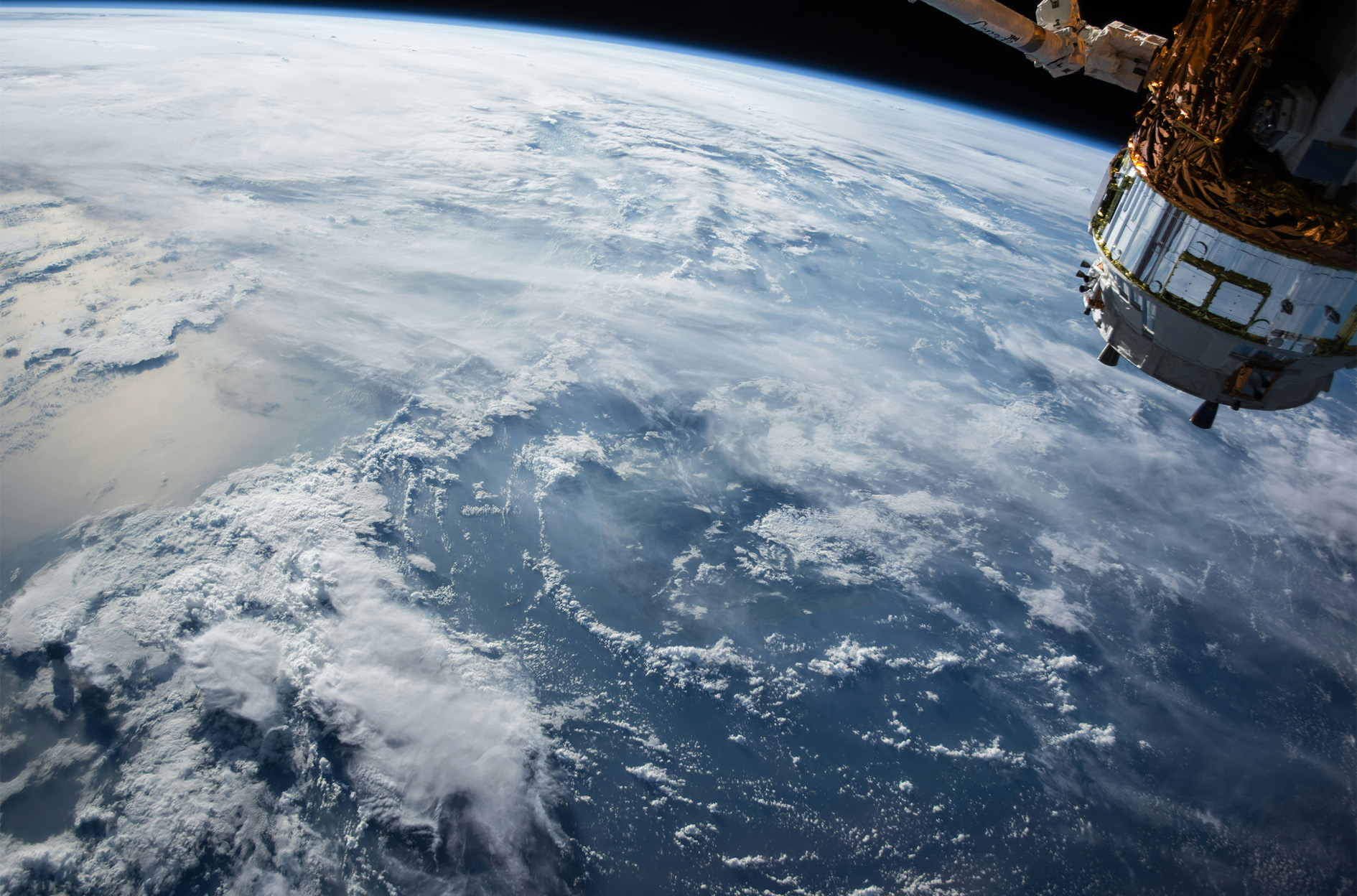
With the global space economy projected to be valued at US$1.8 trillion by 2035, according to the World Economic Forum, the public and private sectors are looking increasingly skyward in search of related business opportunities. Innovation in the space industry is accelerating significantly, from space tourism and in-orbit servicing to sustainable space practices, fuelling a wave of investment in the sector.
As Japan hosts SpaceTide 2025, aimed at “unlocking space for all humanity,” the BCCJ, in partnership with Morrison Foerster and the American Chamber of Commerce in Japan, invited a select group of space sector leaders to discuss the development of the space industry.
Hosted at Morrison Foerster’s Tokyo office, the session spotlighted business collaborations, R&D synergies, and strategic alignment between government and commercial players across Japan, the USA and the UK.
Dr. Naoko Sugita, Advisor to the Director, Earth Observation Research Center of the Japan Aerospace Exploration Agency (JAXA), opened the event by providing an outline of how Japan’s space ecosystem has evolved. While fifteen years ago it comprised only the government, JAXA and its suppliers, today it includes a range of governmental, academic, financial and commercial organisations.
“Things have changed most drastically in the past decade, notably in the mobility of human resources and the money involved in the sector,” she said.
And, as the world’s interest in space grows, JAXA aims to be a space-related hub of industry, academia and the public sector, both for Japan and internationally, she added.
Her remarks were followed by an off-the-record panel discussion with speakers Chris Blackerby, Group Chief Operating Officer at Astroscale Holdings; Olivier Farache, Chief Revenue Officer at Vast; Jumpei Nozaki, Director & Chief Financial Officer of iSpace; and Jeremy White, Global Chair of Space and Satellite Industry Group at Morrison & Foerster LLP.
Commercial challenges
The speakers agreed that at this early stage of the space ecosystem, commercial success in their respective organisations is out of reach. Their main goal is to create revenue and reduce costs while moving towards “a repeatedly demonstrated capability” in the field.
In the case of missions, for example, organisations are “not necessarily looking at margins” at present, as most missions are funded initially by internal investors. Later, missions may be partially funded. A realistic goal, then, is to have vision and work towards being profitable in the long-term.
For services, customers want to pay at the point of use, rather than ahead of time, meaning firms need to fund services on the front end. This makes profitability difficult initially, another speaker shared.
Sustainability and space
Despite an increase in the volume of space debris—resulting from discarded rocket stages, defunct satellites and fragments from break-ups in orbit—its removal is not yet commercially viable, explained one panellist.
“We don’t see a near-term commercial market … that will take time,” he said. Still, governments are interested in a circular space economy, which aims to reuse, repurpose or recycle space assets instead of discarding them as debris. “We hope to provide services such as refuelling and repairing satellites so they can stay up longer, and to take pictures to ensure space equipment is still healthy and can be used … the more we can win those kind of contracts, the more we can develop capabilities and move toward more trash removal.”
In time, removal of space debris will be a consideration for all members of the space economy, added another panellist, who noted: “If you have a space station that has been orbiting for 10 years, you can only block so much debris. At some point you have to remove it.”
More transportation in space, including for the removal of debris, brings other business opportunities, too. One speaker noted that “the biggest opportunity on the lunar surface is resources, including the separation of water into hydrogen and oxygen,” but there is a long way to go until facilities can be developed for the process.
Space stations, orbital infrastructure
Of the methods to generate revenue from space stations, “human space flight will be the main driver” followed by scientific research in space, said one speaker.
The number of experiments carried out onboard the International Space Station (ISS) is expected to continue to rise and, after the ISS’ planned retirement in 2031, opportunities will open up for private organisations to conduct research, too. In short, “as launch costs keep coming down, space will be more accessible,” he said.
Fundamental to the future of space stations and other orbital infrastructure, though, is servicing, said another panellist: “People talk about the possibility of a US$2–3 trillion space economy with tens of thousands of satellites and multiple space stations with dozens of people in orbit. That’s not going to exist without a viable capability to refuel, remove, recycle and manufacture; it would be too risky, with too many issues … Allied partners need to work together to build out capabilities so we have tech to utilise space.”
Engaging with investors
Asked how to tackle discussions with investors who wish to balance high risk with the potential for high returns, the panellists said it’s important to be honest and resilient while accepting that the current risks will not suit every investor.
“We do not hide the risk,” said one, adding that instead they demonstrate examples of their previous successes.
Educating investors is also key, said another, noting: “We have to convince our investors. The challenge with this industry is the time between each mission: if we have a set back on one mission, we have to wait a couple of years for another opportunity to show what we can do.”
Still, firms willing to take a risk on the space industry could be well rewarded, one panellist concluded: “This is a unique time in history—the future space economy will be enormous and space exploration and space habitation will be a huge part of it.”