Cracking Japan’s Talent Code
Written by Sterling Content
With Japan expected to face a shortfall of some 11 million workers by 2040, according to a study by think tank Recruit Works Institute, attracting, recruiting and retaining staff is set to become even more important.
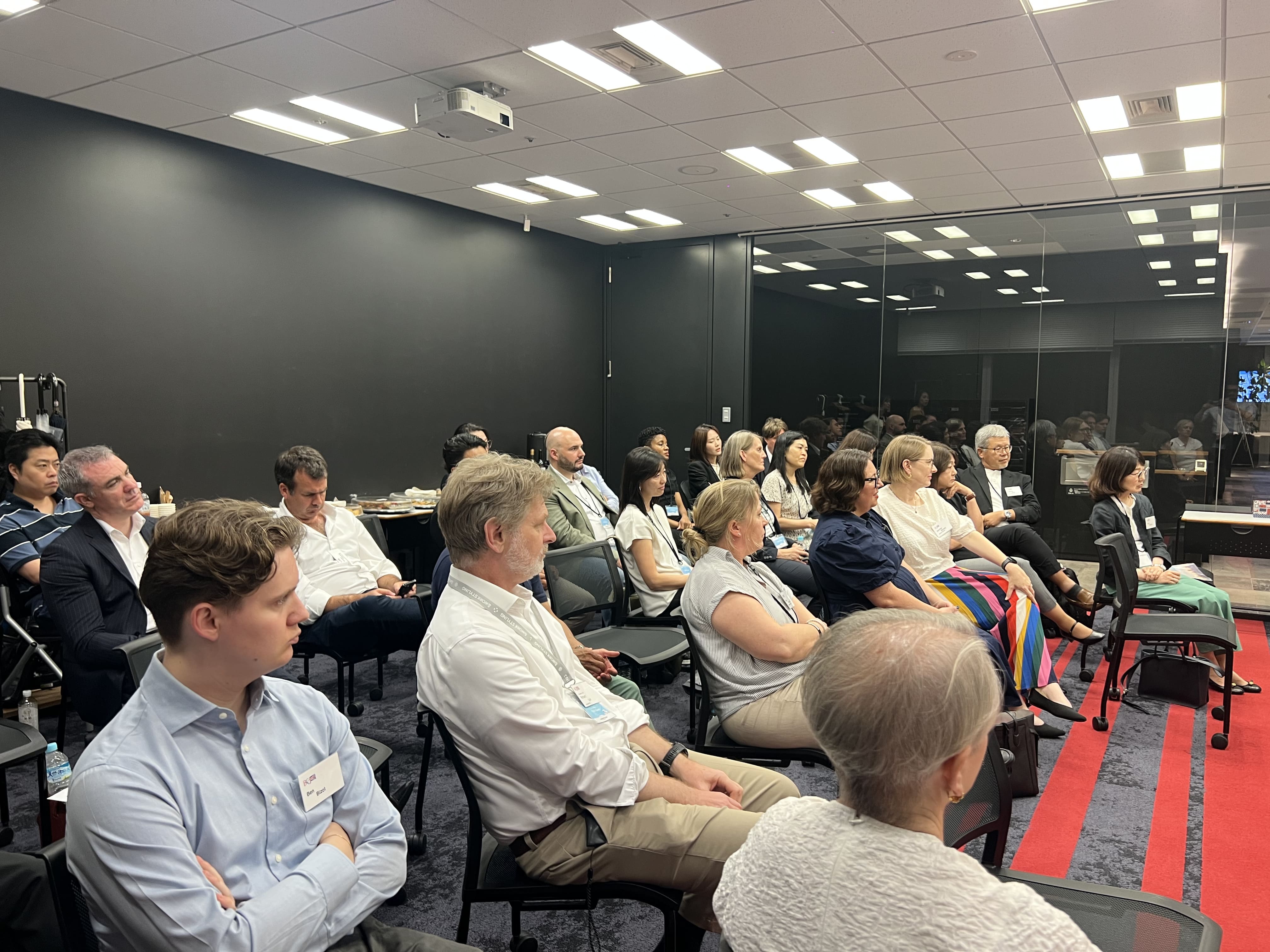
In such a challenging market, organisations are seeking ways to transform their people management, talent development and corporate culture. To support them, the British Chamber of Commerce in Japan hosted an event featuring forward-looking firms and individuals tackling Japan’s deepening talent crisis.
The panel comprised Heloise Carnet, Director – Sales and Marketing Tech & Digital – Perm & Contract of Robert Walters Japan K.K; Brent Conkle, Leadership and Organisational Development Consultant; Daniel Ring, founder of HR Consultancy Elevate; and William Nealy, Jr., Learning & Development Manager at Shiseido Global HQ.
Tackling the impact of demographic trends
Carnet of Robert Walters Japan opened the session by outlining how Japan’s ageing and declining population is affecting its job market. According to statistics provider Worldometer, the average age in Japan is 49.8 years and rising, with 35% of the population expected to be 65 years or older in the next 10–20 years.
The shrinking number of working-age people is creating a candidate’s market, she explained, noting there are 1.23 jobs available for every job seeker. In specialised fields, such as consulting and tech, this ratio rises to almost eight jobs available for every qualified candidate. And with Japan ranked 92nd out of 116 non-native English-speaking countries and regions for English proficiency, there is even higher competition for candidates who are proficient in English.
Facing these challenges in recruiting the best talent, companies need to demonstrate their attractiveness. “As candidates have the power in this market, candidates are also interviewing you [during their interview],” she said, noting the hiring process should be efficient and quick while including a strong sell. “Image and initiatives matter,” she added, pointing out that Robert Walters Japan supports clients by promoting their offerings such as recognition schemes, career mobility and a flexible working environment.
“Companies also have to invest in talent development because it costs so much to lose a qualified worker in this market,” she said. “It’s important to have a long-term view; if the staff’s not perfect, it’s your job to grow them to make them better.” Moreover, talent development pays off, according to a LinkedIn Workforce Report that found 95% of employees stay longer at companies that invest in their professional development.
Assessing behaviours, too
When filling a role, hiring managers should assess not only a candidate’s skills, but also their behaviours, to ensure the person is the right fit, said Ring of Elevate. This process helps reduce the risk of financial loss to the company, which could equate to multiple times the annual salary of the role being filled.
Impacts of a poor match include the cost of recruitment and onboarding—which can take longer for senior positions—as well as reduced productivity for a new hire, time taken on mentoring, and, in the case of leadership roles, exit risks across the team.
“On the other hand, having the right leader in place is just as beneficial,” he said, pointing out that it creates stability for team members and clients, while also attracting greater interest in vacant roles that builds up the talent pipeline. “The RoI on the right leader can be significant, even within 12–18 months of hiring if organisations get the onboarding right,” he added.
Ring introduced the Second Opinion Service, offered in Japan by Global Leadership Solutions, as an effective tool for understanding the behavioural fit of a candidate. Initially designed by Danish firm Garuda, and developed using research carried out by the European Federation of Psychologists’ Associations and the British Psychological Society, the behavioural “competency” profile is typically carried out at the tail end of an executive search with the final few candidates. The data is used for decision making and effective onboarding.
The competency profile is divided into three areas: head (problem assessment, critical thinking and risk appetite), heart (emotional intelligence, empathy, interactions with others and self-awareness) and legs (driving performance and helping others succeed). Hiring managers can even prioritise the traits for each role to gain a customised profile.
“Pre-hire assessment can improve the satisfaction of hires, save costs and improve productivity and therefore profitability,” he said.
For talent succession, meanwhile, Ring suggested organisations use a nine-box grid to assess and categorise staff based on their performance and potential. This method helps identify those who are ready for a leadership position and those who need a few more years to develop. He also recommended complementing the nine-box grid with 360 and behavioural assessments, to help reduce bias and build a more complete profile.
“Succession matters because it supports continuity and reduces disruption,” he said. “It gives top people a path for development,” including in self-leadership (self-awareness), business leadership (building a strong organisation and driving results) and people leadership (developing a team and talent).
People and culture
Nealy of Shiseido shared some of the actions being taken by the 153-year-old international beauty company to support its people and culture. “We need to connect our past—our DNA—with our future,” he said. “It’s important there is a sense of urgency to development and we’re practical and honest with the challenges we face.”
These challenges include talent retention, career mobility, engagement and alignment of systems and experiences. While organisations of the same size in Japan typically have a turnover of 5%, Shiseido’s was 9% in 2024, partly due to a low internal mobility rate of 2% across roles and functions, he shared.
In response, Shiseido has implemented a “job responsibility-based system, with clearly defined roles and expectations as well as career ownership.” With a renewed emphasis on talent reviews and succession, there is also support such as mentoring.
The company has also developed a new leadership model using a shared framework. “Our key belief is that leadership is for anyone in the organisation, from new graduates to the very top,” he said, noting that leading change means “leading yourself, culture, people and business.”
To identify young emerging leaders, Shiseido is using a “STEP programme” that assesses people’s potential by identifying their strengths and weaknesses, and then supports development to management positions within 2–3 years. Another key initiative, Next Leadership Session for Women, launched in 2017, has resulted in 97 promotions, with 90% of participants to date expressing willingness to advance in rank—a “significant increase, especially among female talent pool.”
Nealy shared that gaps remain in implementation, with alignment lacking globally, but noted that motivation among staff is rising. Furthermore, his team continues to strive for clarity on the direction and progress of talent development to create a better work environment.