Bigger, But Not Different: The Philosophy Fueling NEO Search Partners’ Next Chapter
This editorial has been crafted by BCCJ Member NEO Search Partners and published by the British Chamber of Commerce in Japan.
Recruitment is an industry built around numbers: searches, candidates, interviews, placements and targets. Behind every number, however, is a person making a decision that can shape a career, a team or an entire business.
For NEO Search Partners, that has always been the starting point.
Since launching in Japan in 2022, founders John Camilleri and Laurens Schaberg have built NEO around a belief that business is ultimately about people. Four years on, the company has grown beyond its original executive search offering, expanded into project-based retained search and Fractional HR, supported five startup businesses building their operations in Japan, and developed its presence across Europe.
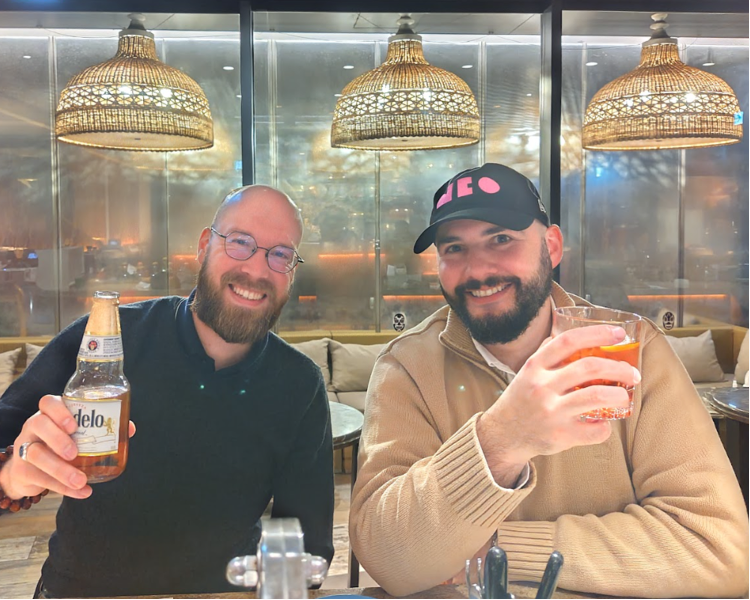
NEO Founders John Camilleri (right) and Laurens Schaberg (left)
NEO’s people-first philosophy came from the founders’ own experience in recruitment. John Camilleri and Laurens Schaberg had seen how easily recruitment could become transactional. A business has a vacancy. A recruiter searches for candidates. Someone gets hired. The process moves on to the next role.
Of course, businesses are transactional by nature. Companies have positions to fill, candidates have careers to build, and recruitment firms have commercial objectives. But John and Laurens felt something was missing: the relationship.
They wanted to build a search firm where recruitment was not simply about completing a transaction, but about understanding the people and businesses behind it.
'Recruitment had become too focused on filling the role, collecting the fee and moving on,' John says. 'We wanted to build something more human, where understanding the people and the business mattered beyond the immediate transaction.'
Placements come and go. Relationships last.
For Laurens, that philosophy also meant challenging an assumption he had seen within the recruitment industry: that a company cannot scale without becoming increasingly driven by KPIs.
'The industry premise is that we cannot scale up if we do not follow a KPI-first approach,' Laurens says. 'NEO is proving that incorrect. We’re challenging that because if we do meet those people first, that will increase productivity, and we don’t need to rely on KPIs in scaling up.'
Trust works better than KPIs.
It starts with understanding the business. The right hire is rarely just the person with the strongest CV. It is the person who understands the business, fits its culture, can navigate its ambitions and is prepared to build something alongside it.
Finding that person requires more than matching a job description to a LinkedIn profile. It requires context, judgement and, above all, trust. John and Laurens have spent nearly a third of their lives in Japan and learned that operating successfully in the country requires more than understanding the market on paper. Relationships, context and reputation matter.
They also saw a particular challenge facing foreign-capital companies operating in Japan. Businesses needed access to exceptional talent, but they also needed people who understood the nuances of the Japanese market and could bridge expectations between global headquarters and local teams.
The answer was not simply another supplier of candidates. It was a partner. That became the foundation of NEO Search Partners.
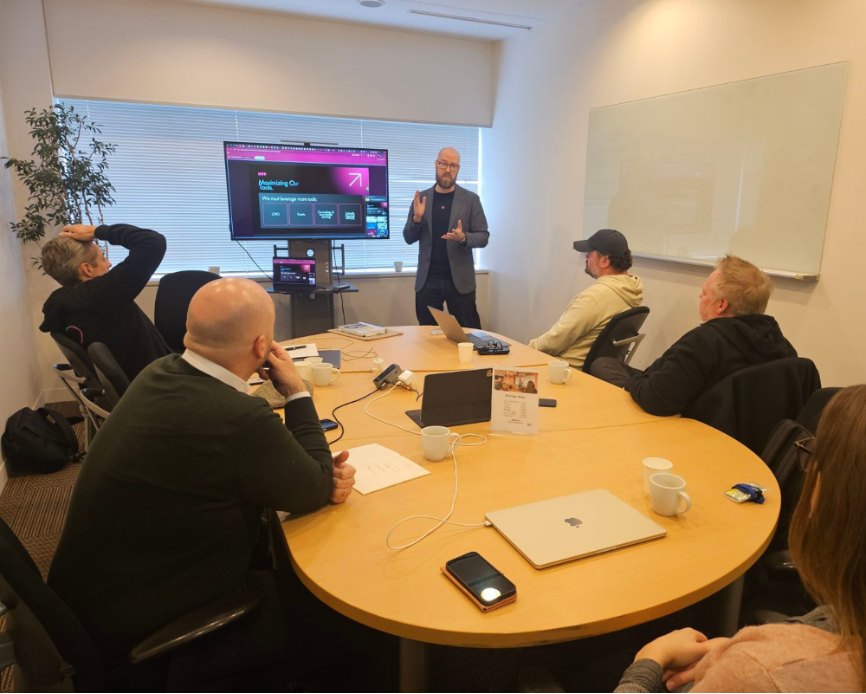
A recruitment supplier and a strategic search partner may seem similar, but in practice they are fundamentally different.
A supplier asks: Who is available?
A partner asks: Who does this business actually need?
That means understanding the organisation behind the vacancy, challenging assumptions, advising on the market and, when necessary, telling a client something they may not want to hear. It also means recognising that a candidate is not simply a potential placement. They are making a career decision of their own.
For NEO, the relationship does not end when an offer is signed. The ambition is to build relationships that continue beyond a completed search, creating a deeper understanding of the business and the people involved. Over time, that approach has shaped more than individual placements. It has shaped the way NEO itself has grown.
Every growing company eventually faces a test: can the philosophy that worked at the beginning survive as the business becomes more complex?
For NEO, growth has meant building around the original idea rather than moving away from it. As client needs have evolved, so has the firm’s offering. Traditional executive search remains at the heart of the business, with NEO working across sectors including IT, manufacturing, automotive, consulting, energy and consumer goods. But its capabilities have expanded to include modern, project-based retained search and Fractional HR support.
Businesses do not always need the same kind of talent support. Sometimes they need a leadership hire. Sometimes they need a more focused search project. Sometimes they need experienced HR capability without building a full internal function.
The role of a strategic partner is to understand which problem the business is actually trying to solve.
That has also meant investing in the infrastructure behind the search itself, from expanding the team to developing dedicated search operations leadership and building Fractional HR capabilities alongside the firm’s core offering. NEO’s growth has not only been about adding services. It has also been about the people behind them.
The employees who joined NEO along the way have taken on new responsibilities, built new capabilities and helped shape what the company has become. The firm may have started with John and Laurens, but the NEO of today is increasingly built by the people who have chosen to grow with it.
That principle becomes particularly visible in NEO’s work with startups. The firm has supported five startup businesses this year, helping build their operations in Japan from the ground up. For these companies, the challenge is rarely simply finding a candidate. The bigger question is often where to begin.
An international business entering Japan may have a clear business plan but no local team, no established HR function and limited understanding of how its existing people strategy will translate to the Japanese market.
It may know that it needs to hire, but not yet know what the first hires should look like, how the organisation should be structured or which parts of its global approach need to be adapted locally.
This is where NEO’s expanded offering can make a practical difference. Instead of starting with a vacancy, the conversation can start with the business itself.
- What is the company trying to achieve in Japan?
- What does the first year of the operation need to look like?
- Which roles need to be hired first?
- What kind of leadership will be needed?
- How should the hiring process work?
- And when does it make sense to build internal HR capability?
From there, NEO can support different stages of the process, from defining the search and finding the right leadership talent to project-based recruitment and Fractional HR support as the organisation takes shape.
The result is a different starting point for companies building in Japan. Rather than hiring first and figuring out the structure later, businesses can think about the organisation they are trying to build and make their people's decisions around it.
This is important for smaller international companies, where the first few hires can have an outsized impact. The wrong leadership hire can change the direction of a new operation. A poorly structured team can slow growth. And a people strategy copied directly from headquarters may not work in the same way in Japan.
For companies operating in Japan, NEO’s growth therefore means more than having access to a broader range of recruitment services. It means having the option to bring in a partner earlier, before a vacancy exists, when the business is still working out what it needs.
That is what the expansion from executive search into project-based search and Fractional HR represents. The services have changed because the problems businesses face are not always the same. But the starting point remains the business itself.
NEO works with increasingly operate across borders. A company may be headquartered in Europe, building its Japan operation, hiring a leadership team in Tokyo and looking towards the wider APAC market. The challenge is no longer simply finding talent in one location. It is understanding how different markets, cultures and expectations come together. Talent does not stop at borders. Neither should the search for it.
NEO’s role increasingly sits at helping international businesses navigate not only where to find talent, but how to make people's decisions across different markets. It is a natural extension of the company’s beginnings in Japan, where understanding context was always as important as understanding the role itself.
As its clients have become more international, NEO has evolved with them.
The idea of putting people first also extends beyond recruitment itself. NEO has supported initiatives addressing social issues in Japan, including The Ones Left Behind, a documentary highlighting marginalised communities and the people who are often overlooked by society. Supporting work like this is not a direct extension of executive search. But it reflects a broader belief that businesses do not operate in isolation from the communities around them.
Looking at NEO today, it would be easy to focus on the changes since 2022, but the philosophy behind that growth is not only visible in how NEO works with clients. It is visible in how the company has built its own team.
For both John and Laurens, that has meant recognising that the way NEO treats its own people ultimately shapes how it treats everyone else. In tandem, that has also meant learning when leadership requires stepping back rather than always leading from the front.
The next chapter will inevitably bring more growth: more markets, clients, people, and potentially more services. The challenge for any growing company is not simply to become bigger. It is to become bigger without losing the reason it started in the first place.
For NEO, that reason remains straightforward. Business is ultimately about people.
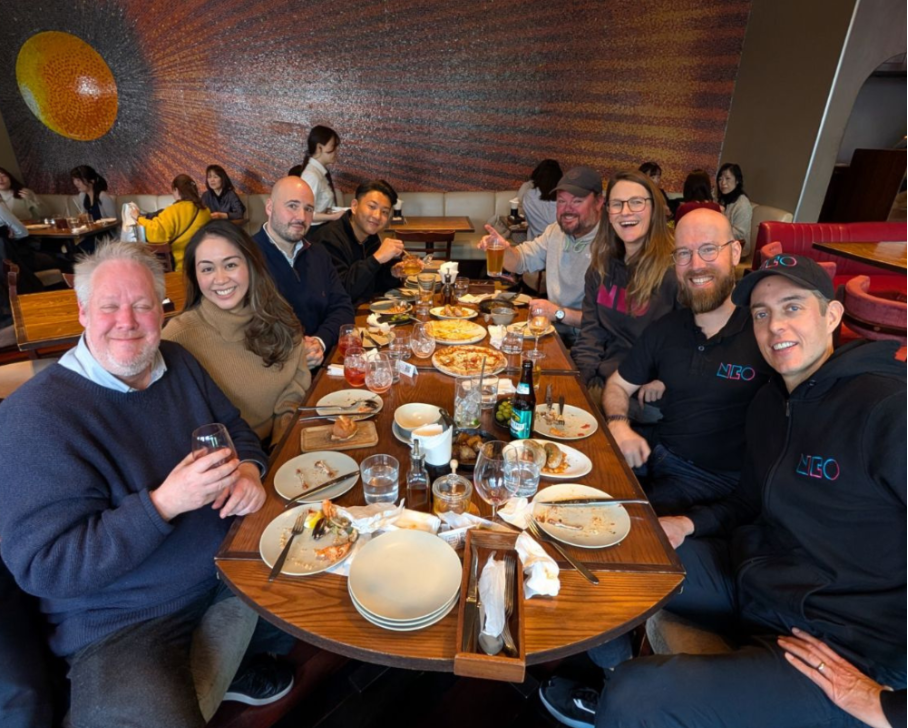
And perhaps the most telling measure of NEO’s growth is not how far the company has moved from where it began, but how many people have grown with it and how much of that original idea they have carried forward together.