
BBA 2025 Winner Profile: Responsible Business – Walk Japan
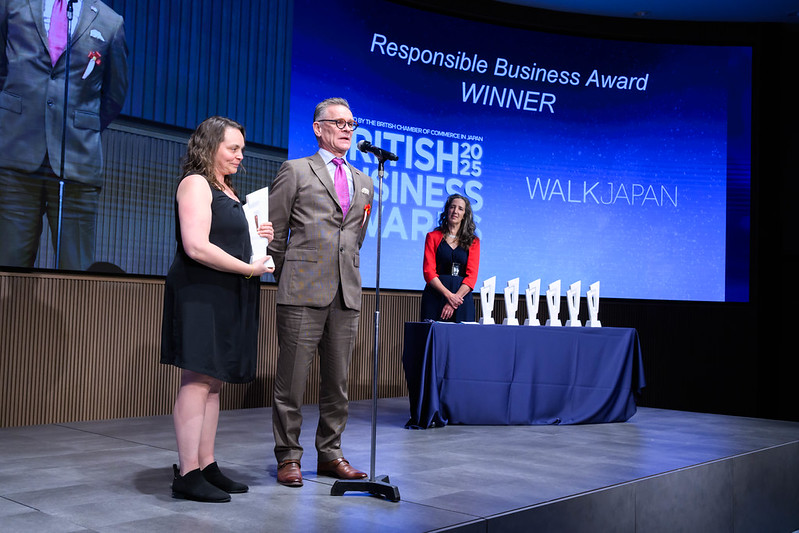
Walk Japan, a travel company specialising in walking tours that take visitors to off-the-beaten-track and culturally rich areas, has been awarded the 2025 British Business Award (BBA) for Responsible Business.
Paul Christie, the company’s CEO, accepted the trophy at the British Chamber of Commerce in Japan’s black-tie gala in early November, describing the accolade as 'a lovely badge of honour for the whole team.'
From revitalising rural communities and expanding sustainable farming, to restoring heritage and promoting inclusive governance, Walk Japan delivers measurable impact aligned with the United Nations Sustainable Development Goals while demonstrating the power of responsible tourism in Japan. The BBA recognised its exceptionally effective responsible business initiatives, across both environmental and social areas, in the past 12 months.
Responsible start
In 1992, Walk Japan started to lead immersive walking tours, beginning with a tour of the Nakasendo Way, an ancient route that passes through several prefectures in central Japan. Since then, from its head office in Hong Kong, the company has created and operated a wide range of original tours that explore the heart of Japan’s lesser-known regions.
Walk Japan’s subsidiary, The Japan Travel Company, makes reservations for hotels, transportation and restaurants from its head office in the Kunisaki peninsula, Oita Prefecture. In 2024, more than 6,000 people from around the world joined Walk Japan on over 1,000 departures on 50 different tour itineraries averaging 8–10 days’ duration.
Tours are composed of small groups that predominantly use family-run businesses and are created in collaboration with local communities, both to deliver cultural value and to ensure economic and social benefits reach host regions. The 'Onsen Gastronomy: Noto' tour, launched in 2025, channels income directly into recovery of the Noto peninsula, Ishikawa Prefecture, parts of which were devastated by an earthquake in 2024.
'Walk Japan’s core qualities include quality and creativity,' said Christie of the tours. 'Our tour leaders are knowledgeable, experienced and enthusiastic. And several times a year, the whole company gathers to share information and to perfect skills, ensuring we maintain a high level of consistency.'
In operations, the vendor relations team formalises ethical supplier engagement with nearly 1,000 owner-managed businesses. Flat structures and open communication ensure staff at all levels contribute to decisions.
The company has increased employment from 130 in 2024 to almost 160 in 2025. This total includes 38 staff in Kunisaki, a rural area with few job opportunities, which has led to greater spending at local businesses, more tax revenue for the local government and an increase in the enrolment of children attending the local school.
Team members hail from a wide range of backgrounds and industries and are encouraged to grow with the company into more senior positions. Indeed, not a single director nor manager has been hired from outside Walk Japan in the company’s history.
The Community Project
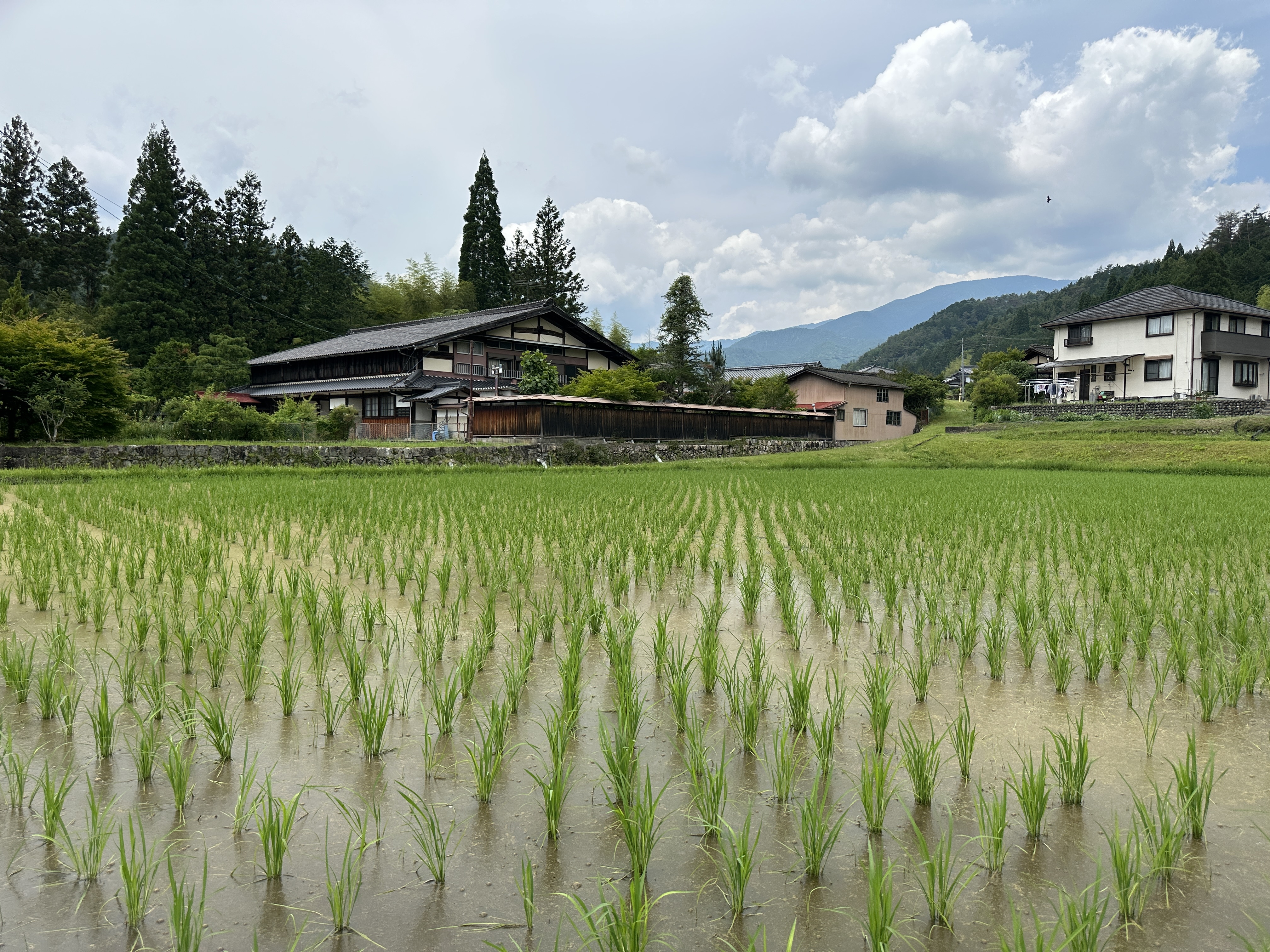
Walk Japan’s Community Project, which comprises all the company activities including tours, is helping the communities of two small neighbouring, rural valleys on the Kunisaki peninsula maintain their society and environment with the long-term vision of providing the area with a sustainable and viable future.
Established in 2007, the project includes farming of rice, shiitake mushrooms, fruit and vegetables, and forestry management supporting biodiversity. In 2025, the team harvested an estimated 7,000 kg of rice for local consumption, with some exported to Hong Kong and Singapore. Dry shiitake are also sent to the same markets. Further expansion, as the project takes over more agricultural land due to the retirement of farmers, is expected to lead to a doubling of output to 15,000 kg in 2026.
The project also encompasses the revitalisation of akiya (empty or abandoned properties) into offices, guest accommodation, family homes and classrooms for local children to learn English. Other activities include maintaining communal land, such as parks, running local events, and rallying the community in the face of a plan to flood the neighbourhood with an expansion to a dam.
Critically, the project is the centre of stakeholder engagement. Staff share progress at management meetings, keeping all employees invested. All the company’s itineraries to Kunisaki allow participants to appreciate first-hand what is being achieved through meeting farmers, visiting the offices and speaking to staff.
Walk Japan’s quarterly newsletter, which has over 50,000 subscribers, always includes updates on the project as well as new tours, media appearances and so on, ensuring customers, partners and media remain informed about ongoing work. This transparency fosters trust and long-term commitment from all stakeholders.
'It is an important sustained investment by us, not just for today but into the future, for wider society, ourselves and our business. We believe the Community Project helps us to maintain our attractiveness as a company for our customers, staff, suppliers and many others,' said Christie.
Looking ahead
Walk Japan aims to continue to expand the project, combining staff and volunteers to grow its range of tour itineraries and sustainable farming practices, while supporting rural employment and cultural promotion. Plans are also underway to launch new tours prioritising regions that are under-visited or undergoing recovery, ensuring tourism supports local regeneration.
In Nakatsugawa, Gifu Prefecture, a short distance from the Nakasendo Way, the company is taking over custodial duties for a 200-year-old building that was once the regional chief’s home and a place for important guests to meet village dignitaries, be entertained and stay overnight. The home has long been a loved and respected local symbol, but the owning family, who have a 400-year history at the centre of the community, can no longer maintain it and there is no younger generation to take over. With the blessing of the family and community, Walk Japan is stepping up to protect the building and its history while returning it to its traditional role of welcoming visitors, both from Japan and overseas.
For Christie, there is always more that Walk Japan can do in responsible business, which he says is not only good for society and the environment, but also for business.
'At its core, responsible business is about humanity. And our company is very much a community of people enthusiastic about giving something back to Japan,' he said.