15 Years On: The Great East Japan Earthquake and Tsunami
Community and Business
11 March 2026
Fifteen years ago today, on 11 March 2011, the Great East Japan Earthquake and the devastating tsunami that followed changed the lives of communities across the Tohoku region forever. Nearly 20,000 people lost their lives, with more than 2,500 still officially listed as missing, and entire towns along the Pacific coast of Iwate, Miyagi and Fukushima were destroyed or profoundly altered.
In the years that followed, the people of Tohoku demonstrated extraordinary resilience. Reconstruction has been long and complex, but communities across the region have worked tirelessly to rebuild homes, livelihoods and local economies while preserving the identity and spirit that define the Sanriku coast. The recovery effort also drew support from across Japan and around the world. Many BCCJ members stepped forward to assist affected communities, contributing expertise, resources and long-term engagement through initiatives such as the BCCJ Back To Business (B2B) Initiative, launched in 2011 to help reconnect regional businesses with international networks and new opportunities.
More recently, the Chamber marked the tenth anniversary of the disaster through Tohoku Week, a series highlighting the people, businesses and cultural richness of Miyagi, Iwate and Fukushima, while encouraging renewed engagement with the region’s communities and industries, as outlined in Tohoku of Tomorrow.
Today, on the fifteenth anniversary, we reflect not only on the tragedy of that day but also on the partnerships, initiatives and community efforts that have helped shape recovery across the region over the past decade and a half. We also share the story of BCCJ member Atlantic Pacific Japan, whose work in Kamaishi, Iwate Prefecture highlights how cross-cultural collaboration and community engagement can contribute to long-term resilience.
UK-Japan Partnerships and the Renewal of Kamaishi
The relationship between the United Kingdom and Japan is often discussed through trade and investment. Yet some of the most meaningful collaborations happen at the community level. When organisations work across cultures with a clear social purpose, they can bring new energy, ideas and networks to places facing difficult challenges. Kamaishi in Iwate Prefecture is one such place.
Fifteen years after the tsunami, the city continues to rebuild while also confronting a broader issue shared by many regional communities in Japan: population decline. Young people leave for larger cities, and towns must find new ways to create opportunity and identity. Kamaishi has responded with creativity. In the years after the disaster, the city successfully bid to host matches during the 2019 Rugby World Cup. The stadium built for the event sits between forested mountains and the Pacific Ocean, creating a powerful symbol of a community reconnecting with the wider world.
At the same time, smaller coastal communities within Kamaishi have explored thoughtful approaches to rebuilding. In Nebama, residents chose not to construct the large concrete seawalls that now line much of Japan’s eastern coastline. Instead they rebuilt homes higher up the hillside, preserving their view of the sea and designing the community around shared spaces and a village hall at its centre. Elderly residents were placed at the heart of the settlement to strengthen social connection.
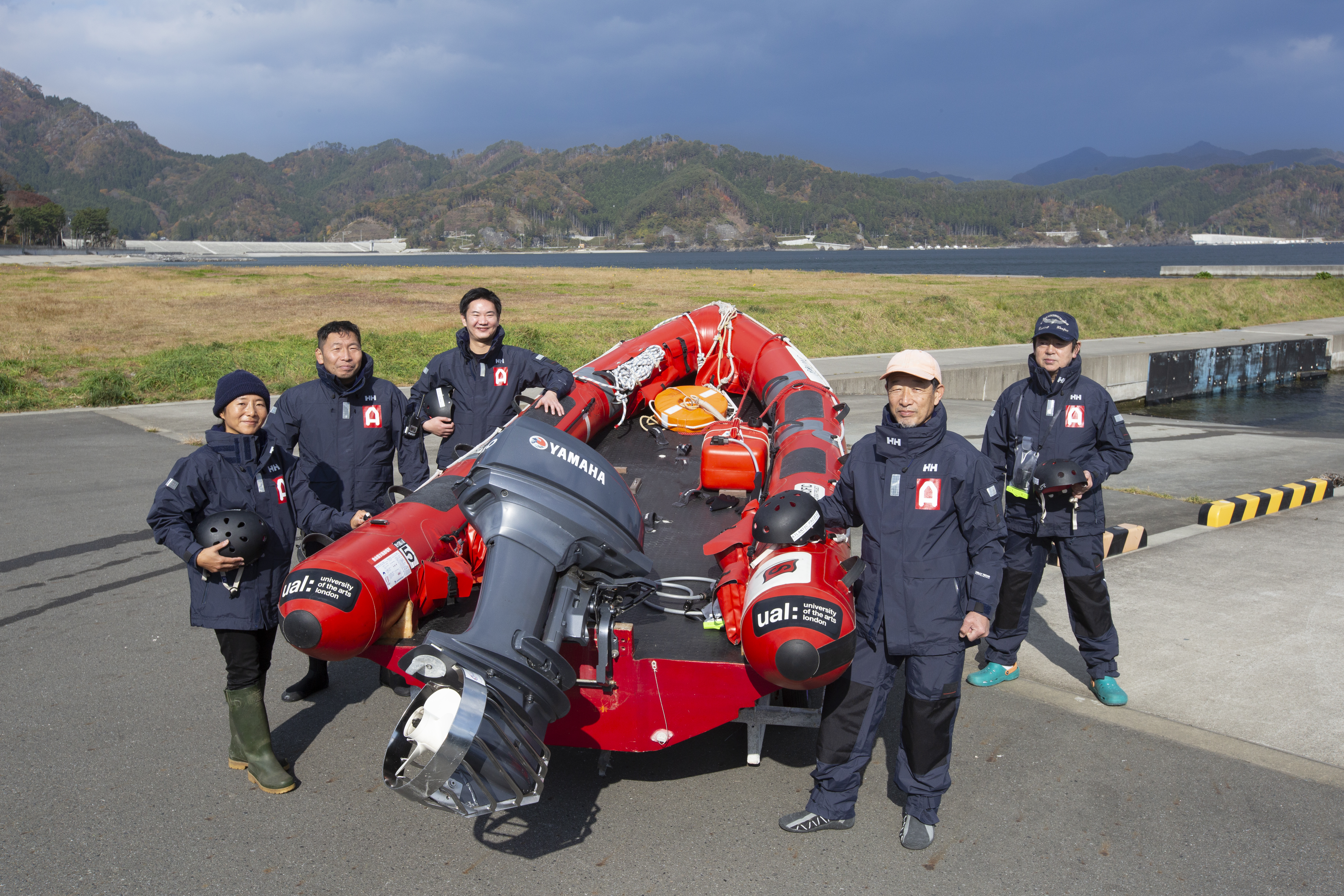
It is in Nebama that Atlantic Pacific International Rescue, a UK founded organisation and member of the British Chamber of Commerce in Japan, established Japan’s first volunteer run lifeboat station in 2016.
The idea came from conversations with residents after the tsunami. Many remembered the devastating moment when people were swept out to sea and there was no lifeboat service able to respond.
Over the past decade, the lifeboat station has become more than an emergency resource. It has developed into a centre for education where students from Japan and around the world learn lifesaving skills such as CPR, first aid and water rescue. More than one thousand young people have taken part in these programmes.
For Kamaishi, welcoming students and volunteers from outside the region brings new perspectives and energy to a community that might otherwise feel increasingly isolated. For participants, the experience offers the chance to learn practical skills while understanding how communities respond to disaster and rebuild with resilience.
This exchange reflects the value of purpose led partnerships. It is also a reminder of the role that organisations such as the British Chamber of Commerce in Japan play in fostering connections between people, ideas and communities.
As a member of the BCCJ, Atlantic Pacific has benefited greatly from the openness and inclusivity of the chamber community. The willingness of members to share expertise, encouragement and networks has had a meaningful impact on our work. It demonstrates how collaboration across sectors can support initiatives that extend far beyond business alone.
Atlantic Pacific’s mission is rooted in prevention. Drowning remains one of the leading causes of accidental death worldwide, and many incidents occur in situations where basic knowledge of water safety or first aid could make a critical difference.
In Japan, recent data from the National Police Agency highlights the scale of the issue. In 2024 there were 1,535 drowning accidents involving 1,753 people. Of these, 816 resulted in fatalities or people missing. While older age groups remain most affected, nearly 11 percent of incidents involved people under 18. Rivers accounted for more than a third of fatal incidents, and young males are increasingly represented in inland waterway accidents.
In response, Atlantic Pacific will bring its ‘Don’t Drown’ campaign to Japan this year. The initiative focuses on young people aged 10 to 19 and aims to promote water awareness, rescue skills and the confidence to respond in an emergency.
This mission will continue through a series of programmes across Japan throughout 2026. These include introductory first aid courses and lifesaving workshops in Tokyo, alongside residential training experiences in Kamaishi where young people can learn rescue techniques, emergency response and leadership skills along the Sanriku coastline.
International summer camps will again bring young people from Japan and overseas together in Nebama to train, learn and share experiences.
On this fifteenth anniversary of the tsunami and the tenth year of Atlantic Pacific in Japan, Kamaishi offers an important reminder. Partnerships built on shared purpose can bring people together across cultures and sectors.
When businesses, educators and communities work together, they can do more than create economic value. They can help communities recover, strengthen resilience and look forward with renewed confidence.